








A manpower-intensive industry, our progress in the telecommunication sector in Sri Lanka depends on its nationwide human capital, providing a broad range of services to ensure continuous connectivity. Operational excellence, technical expertise, and local presence of our people converge to provide network reliability, quick issue resolution, deliver superior customer service, and drive innovation across the nation.
Our Human Capital strategy strives to build a digitally capable, agile, and high-performing workforce to support the Company transformation into a next-generation TechCo and enable long-term value creation. Aligned with the Company’s priorities of sustainable growth, digital transformation, operational excellence, and an inspiring people culture, strategic initiatives in 2025 centred on workforce optimisation, HR digitalisation, leadership development, employee engagement, constructive industrial relations, and continuous learning to strengthen future-ready capabilities. Leveraging its nationwide operational footprint, deep technical expertise, and established learning ecosystem, the Company continued investing in workforce upskilling, artificial intelligence capabilities, leadership acceleration, and industry partnerships to enhance innovation, operational resilience, and service excellence. At the same time, transparent governance practices, inclusive employee engagement, collaborative decision-making, and participatory people practices strengthened workforce stability, institutional knowledge retention, and organisational resilience, positioning the Company to sustain its leadership within an increasingly technology-driven and highly competitive digital services landscape.
Over 7,900*
Employees
Male 4,289 Female 1,531
Diversity Representation
705
Promotions Effected
210
New Recruits
25,763
Employees Trained
23.44
Average Training Hours per Employee
93%
Retention Rate
How We Impact SDGs


* Note: This figure is applicable to SLT Group.
are founded on strict ethical standards, focusing on diversity and inclusion.
Stands out as indispensable instruments of employee voice in submitting enquiries and requests to the HR function.
 Human Resource Governance
We play a pivotal role in enabling our workforce by ensuring compliance with applicable laws and regulatory instructions, internal governance frameworks, while driving people strategies aligned with the Company’s transformation agenda. The function is responsible for attracting, developing and retaining talent, strengthening performance management practices, and fostering an inclusive and high-performance culture across the organisation.
In line with SLFRS S1 and SLFRS S2, we integrate ESG principles into people management practices, with a focus on ethical conduct, diversity and inclusion, employee wellbeing, and sustainable workforce practices.
Trade-offs across financial, social, and natural capitals are founded on strict ethical standards, focusing on diversity and inclusion. Transparent reporting allows stakeholders to assess both financial and non-financial outcomes, building trust and partner with SLT for long term value creation.
HR Initiatives for Good Governance
In 2025, the HR function engaged in transforming the governance framework by aligning people practices with corporate priorities and organisational agility to augment the performance driven culture.
Workforce Optimisation
To ensure the right workforce for current and future demands on connectivity, a workforce optimisation drive continued by reviewing talent deployment across business units, adopting flexible resourcing models (eg: gig work, outsourced, contract hires, internships) aligning functions with the Company’s objectives.
Digitalised HR Processes
A significant number of HR processes were digitalised implementing Robotic Process Automation (RPA), AI and ERP automation.
As part of the HR digitalisation initiative, most HR processes were transitioned from manual to digital platforms. These activities aligned with the corporate digital transformation strategy by improving efficiency, data accuracy, transparency, compliance, and enabling faster, self-service–driven HR operations.
Among this suite of people-centric initiatives, Ask HR stands out as indispensable instruments of employee voice in submitting enquiries and requests to the HR function. A centralised and confidential platform where queries are logged through a secure portal. Responses to employee HR-related inquiries are provided based on established policies and procedures, with specialist input where necessary.
Empowering Employees with Digital Convenience and Smater HR Solution

Neylie App - A mobile app with self-service feature for employees

Ask HR to Resolve HR Related Queries

Face Recognition for Attendance

RPA for Personal Loan Processing

RPA for auto-earn, no-pay feature notification

Record Room Digitalisation

SLT HR INFO SMS Alerts

Historical Documents Integration Initiation

The Transfer Process

Preferred Work Location

Uniform and Shoes Data Entry

Medical Facility Balance Inquiry

Medical Claim Letter Generation

Workflow Document Update
Mobile First
Access anytime, anywhere
Employee Empowerment
Self-service for faster and easier HR processes
Operational Efficiency
Automation and digitalisation for greater efficiency
Transparency & Accuracy
Reliable, timely and secure information
The Neylie App is our official employee mobile application for managing HR operations and employee account services, restricted to staff using corporate credentials. The App makes routine HR services a self-service, optimising time for both the employee and the HR function. Employees are able to conveniently manage a range of HR-related activities through their mobile devices. This includes marking daily attendance, submitting leave applications, accessing published circulars, and viewing their individual performance grades. These digital capabilities enable employees to stay informed and engaged while ensuring seamless and efficient access to key organisational information anytime, anywhere.
Policy Review
A policy review exercise was conducted to strengthen the governance framework, focusing on fairness and inclusivity, compliance with statutory labour practices and aligning with current business objectives.
Pride in Performance Culture
Mid-year reviews and performance calibration steps were introduced enhancing transparency, fairness, and trust, in performance evaluations. The Line Manager Development Programme continued to build leadership capability, driving leadership performance, enhanced engagement, and consistent talent outcomes.
HR Consultancy Project
A strategic HR Consultancy Project was initiated with third-party expertise to recalibrate its organisational architecture, talent frameworks, and reward systems with the Company transformation agenda. The initiative is expected to support our long-term strategy by cultivating a future-ready team by aligning talent and performance-linked reward frameworks to drive growth in a technology-driven market.
Employer Branding Strategy
With the strategic intent of positioning the Company as a first choice employer and adding bench strength, we refreshed the Employee Value Proposition and established stronger partnerships with universities through campus career fairs. We launched a Trainee Engineer Programme to secure and fast-track high-potentials for development and mentoring.
Panel members on interview boards were refreshed with soft skill tools to generate a consistent and positive candidate experience, at the first contact.
Talent Acquisition
To attract high-potential talent while ensuring alignment with organisational needs and future growth, the Company primarily utilises traditional hiring channels in combination with alternative talent sources, gig work, contract-based recruitment, internships, and outsourced models. This creates recruitment flexibility to garner diverse and specialised skills that are a prerequisite for the Company’s sustainability. Early engagement with universities, implementing targeted campus programmes and conducting trainee initiatives ensure a steady pipeline of talent, that are mentored and developed as a future-ready team.
The Company’s Recruitment Policy is governed by a rigorous framework that promotes fairness and equal opportunity for all candidates.
Attracting talent, as well as retaining staff with high-demand skill sets is always a challenge. To circumvent this issue, we offered a competitive compensation package, structured training, and development, and created space for innovation and progression for our employees to achieve their career goals.
Employees by Gender
| SLT | Mobitel | |||
| 2025 | 2024 | 2025 | 2024 | |
| Male | 4,289 | 4,462 | 977 | 983 |
| Female | 1,531 | 1,576 | 428 | 414 |
Employee by Category
| SLT | Mobitel | |||
| 2025 | 2024 | 2025 | 2024 | |
| Permanent Staff | 5,714 | 5,992 | 1,304 | 1,322 |
| Contract Staff | 106 | 46 | 101 | 75 |
Employee by Age
| SLT | ||
| Age | 2025 | 2024 |
| <30 | 388 | 402 |
| 31-50 | 3,441 | 3,533 |
| >51 | 1,991 | 2,103 |
Service Duration at SLT
| 2025 | 2024 | |
| Less than 5 years | 731 | 680 |
| 5-10 years | 2,357 | 2,650 |
| 11-20 years | 658 | 751 |
| 21-30 years | 964 | 1,166 |
| Above 30 years | 1,110 | 968 |
Talent Management Process
Our workforce exhibits a broad spectrum of technical competencies, professional experience, and functional specialisms. To retain and build a future ready team for a sustainable organisation, we committedly implement capability development, reskilling, and upskilling, equipping the employees with strong digital capacities and adaptive skills required for a dynamic telecommunication marketplace. To extend and diversify the existing talent reservoir, we conducted several initiatives for Talent development and Capability Acceleration.
Talent Development and
Capability Acceleration
We have invested LKR 131.93 Mn. in 2025 to cultivate future-ready capabilities through systematically designed training programmes, targeted digital and artificial intelligence curricula and flagship initiatives like the SMART programmes. These converged with formal professional development pathways for employees establishing a continuous learning architecture that enabled employees to acquire emergent technical proficiencies.
- Development of Multidisciplinary workforce through SMART Employee programme was continued. SMART Technician, SMART Sales Officer program and SMART Telecommunication technical officer programme continues to train over 2500 employees through the SMART employee framework.
- Executive Development programme was continued to ensure the development of middle level executives. More than 200 employees are already in the programme and being developed to take on challenging roles in the future.
-
Special emphasis was given to develop skills of the staff in
Artificial Intelligence and Leadership development.
SLT-Mobitel Nebula Institute
of Technology (The Nebula Institute)
The Nebula Institute is the education arm of the Company offering high level academic education in tandem with hands-on experience.
In 2025, the Nebula Institute formalised strategic partnerships with the National Apprentice and Industrial Training Authority (NAITA) to deliver structured industrial training to its student cohorts, and with Ceylon Electricity Board (CEB), to provide six-month industrial placements for students. These collaborations integrate workplace-based learning into the curriculum, enhancing technical proficiency, industry exposure, and employability, while strengthening linkages with key national institutions.
In 2025, the Nebula Institute expanded its portfolio of academic offerings by introducing BEng in Robotics and Artificial Engineering and a BSc in Data Science. It also formalised a tripartite agreement with London South Bank University and Pearson UK to deliver top-notch degrees in BSc Electrical and Electronics, BSc Cyber Security, and BSc Artificial Intelligence. The Institute secured ISO9001:2015 re-certification for its Welisara, Moratuwa, and Kandy campuses, underscoring its commitment to quality management. As a distinctive centre for ICT and technical training, the Nebula Institute continues to supply industry-ready talent and specialist capability.
Total Hours of Training by Grade
| 2025 | 2024 | |
| Senior Management | 3,501 | 2,407 |
| Middle Management | 5,552 | 5,402 |
| Executive | 34,898 | 41,498 |
Note: The above information is pertaining to SLT
Total Hours of Training by
Gender
| SLT | Mobitel | |
| 2025 | 2025 | |
| Male | 90,246 | 8,156 |
| Female | 46,176 | 5,572 |
Key Training Conducted in 2025

AI and Prompt Engineering
Azure AI Fundamentals (AI-900)
Machine Learning and Automation
Stress Management
Python Programming
Counselling Skills for Efficient Relationships at work
Digital Marketing
AWS Cloud Practitioner and Solutions Architect Associate
Workshop on Work Life Balance
Red Hat Certified Engineer
Excelling in Customer Service
The Contact Centre Staff Development Programme and the Customer Service Agent Training Programme for Regional staff were delivered to strengthen frontline capabilities for customer facing practices.
The training programmes focused on advanced communication skills, complaint handling, performance coaching, service behaviours, product knowledge, and empathy centered engagement to ensure high quality customer interactions.
Collaborating for Sustainability
Representatives from the University of Hertfordshire, London South Bank University and Pearson, UK visited the campus in Welisara, to strengthen collaborative bonds with the Nebula Institute.
Partnered as a Gold Sponsor at
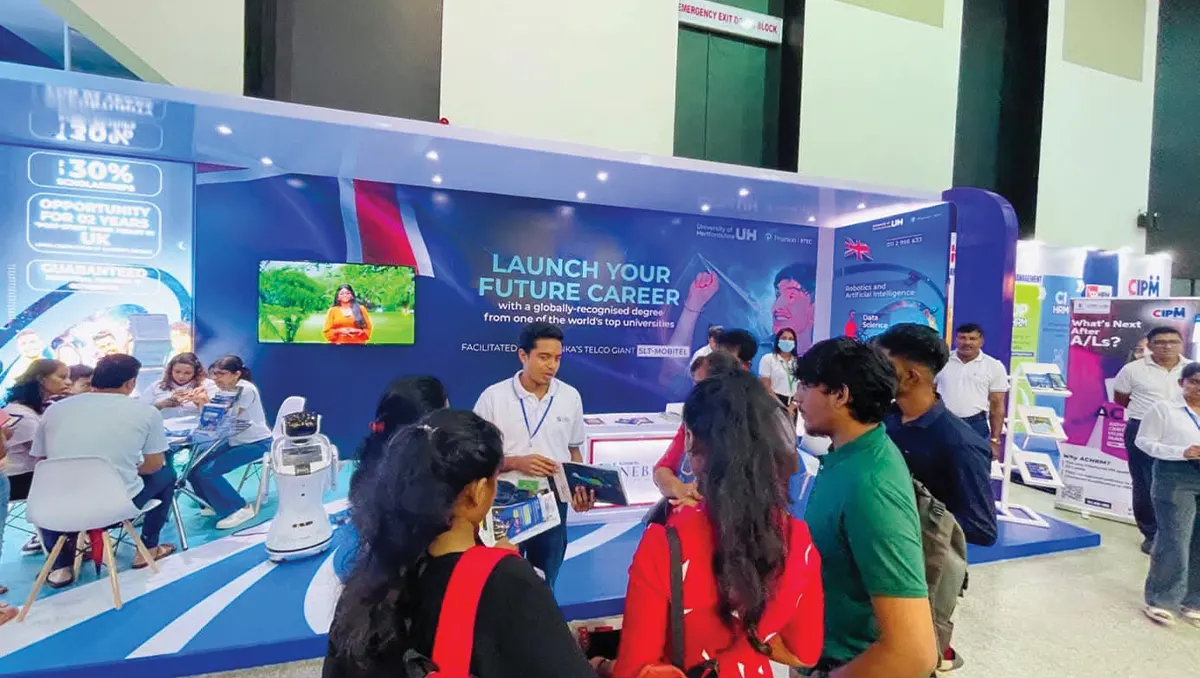
EDEX EXPO 2025
The Nebula Institute’s role as the Gold Sponsor at EDEX EXPO 2025 materially advanced our talent development objectives by strengthening employer branding and industry-academia linkage. This helped in expanding the talent pipeline and creating a platform for future recruits from the national student population. It also paved the way to reinforce our social license as a strategic partner in national development and education-to-employment ecosystem.
Overseas Exposure
Selected staff members were provided with opportunities to participate in industry related overseas programmes to enhance and augment their knowledge and skill levels. Such opportunities afforded them exposure at an international level while some participated as resource persons at such forums gaining brand visibility for the Company.
In addition, our holistic approach, spanning from development of internal experts to dynamic internal workshops and knowledge-sharing sessions, embody a commitment to harnessing and leveraging the wealth of tacit knowledge and deep reservoirs of experience deposited within the Company. This strategy propels the Company forward, ensuring a culture of continuous learning and innovation that remains a cornerstone for the success of the employees.
Value Additions
The Nebula Institute is the only educational institute in Sri Lanka capable of offering this unique combination of industry-aligned education, live-system exposure, and comprehensive training opportunities to students. The key differentiating factor of the Nebula Institute is that it serves as the educational arm of the Company. It is the only such academic institute which has the direct relationship with industrial giants. It adds value to the industry in many ways.
All the laboratories and facilities in the Nebula Institute are being developed according to the international standards imposed by respective academic partners. It has given an opportunity to our employees also to access such facilities which are of international standard.
The Nebula Institute is establishing CDIO (Conceive-Design-Implement-Operate) Laboratory, to integrate learning, experimenting, and innovating within a single immersive environment. Providing hands-on, problem-based, industry-aligned education, the laboratory aims to develop future engineers and technologists. This positions the Nebula Institute as a future-ready centre of excellence developing globally competitive talent, well equipped to meet the evolving needs of the global industry.
Mobitel invested LKR 12.33 Mn., while SLT invested LKR 131.93 Mn. in training and development.
Talent Retention
Our talent retention is holistic and structured, reinforcing employee engagement, career progression, capability development, and recognition that are aligned to the transformation agenda. An integrated set of initiatives were implemented to secure retention, elevate motivation, and preserve institutional knowledge, that generates a sustainable organisational performance and long-term value creation to our many stakeholders.

Performance Management
Recognition and Reward
Wellbeing and Engagement
Learning and Development
Employee Turnover by Age
| SLT | Mobitel | Total | ||||
| Age Category | 2025 | 2024 | 2025 | 2024 | 2025 | 2024 |
| 18-30 | 45 | 27 | 122 | 88 | 167 | 115 |
| 31 - 55 | 154 | 214 | 86 | 105 | 240 | 319 |
| Over 56 | 222 | 202 | 5 | 9 | 227 | 211 |
Grievance Handling
We follow a structured engagement with employees and representative bodies, combining local regulations on employment and an open-door policy, to create a dialogue-conducive environment for grievance resolution. Workforce development, internal mobility, and recognition programmes are emphasised, to strengthen retention and gain conflict resolution. This process is pivotal to balance employee welfare, with operational resilience and public service responsibilities.
A structured and transparent Grievance Handling framework is in place to address employee concerns fairly, promptly, and consistently. In addition, the open-door policy and routine engagement with employee representatives take place, facilitating constructive dialogue for resolution. Governance oversight is by a dedicated Grievance Handling Committee, which convenes regularly to address the issues in a confidential and impartial manner, in line with a defined time frame which typically does not exceed a month. Formal recommendations, thereafter are submitted to the Chief Executive Officer.
Specific grievance handling processes are embedded in performance management and transfer pathways, enabling employees to escalate their concerns and grievances on this score, to review committees. Employee views are systematically considered for mutually beneficial outcomes, and communicated to the relevant parties within stipulated time frames.
To further enhance the objectivity and efficiency of disciplinary inquiries, external Investigation Officers are retained. We are entrusted with the responsibility for non-financial disciplinary issues that were previously handled by the Internal Audit Division. This created a more streamlines, consistent, and people-centric approach that blended well with HR practices and policies.
Monthly Committee Meetings to evaluate complaints
Grievance Consideration
Timely Resolution
Recommendations submitted to the CEO for a resolution within a month’s period.
Trains our employees in future technologies through extensive hands-on experience.
Students can focus their academic projects on real industry issues and use live systems for testing.
Industry visits, to state-of-theart ICT facilities such as undersea cables landings stations, Tier-3 Data Centres etc.
Six-month industrial training with the aim of placements in the Company.
Offers NVQ qualifications at the Nebula Institute Welisara and Moratuwa campuses.
Lab development in line with international industry standards.
Comprehensive academic, welfare, and financial support for educational inclusivity. 30% fee discounts for students based on results.
Special educational financing plan available for our employees to pursue higher education.
15:1 Student to Lecturer ratio, inviting personal attention to academic achievements and training.
Industrial Relations
Through proactive engagement with recognised 25 Trade Unions, we foster constructive employer-employee relations through commitment to good governance, transparent communication, and cordial negotiations. Employee perspectives are received through regular Trade Union consultations that help make informed HR decisions. Additionally, we maintain an open-door policy for all employees offering a cordial platform for issue resolution.
Trade Union representatives advocate for their members in key HR processes including transfers and performance management, provide constructive feedback, and perform a critical function for a mutually beneficial and sustainable workplace. To encourage and build their leadership skills, union officials were granted overseas training and financial assistance to further their educational aspirations.
We introduced the Check-off Agreement to Trade Unions and reinforced adherence to the formal dispute resolution mechanism underlining its commitment to strong employee relations and promoting industrial peace and harmony.
Whistleblowing Policy
We maintain a robust Whistleblowing policy, under strict confidentiality where employees can report breaches of company’s Code of Conduct or violation of legal or regulatory discipline. Reports are received by an independent external resource through multiple channels and are directed to the Board Audit Committee for oversight. Investigations are conducted protecting the identities of Whistleblowers, and the process is governed by a Board-approved policy.
To inculcate a culture of integrity and accountability, targeted awareness initiatives are communicated across the organisation with full procedural details accessible on the intranet
Employees Who are Non-Permanent
Within a strong governance framework and aligning with established workforce standards, contractual employment was strategically deployed to provide operational flexibility and customer service excellence. Contract job roles were used selectively for project-based, specialist, and peak-demand needs, complying with labour laws, equitable treatment, and transparent remuneration frameworks. Rigorous onboarding, performance metrics, and training pathways where needed were offered through HRD. As of end 2025, SLT deployed 106 of contract resources across all its plants and premises.
Diversity Equity Inclusion and Belonging (DEIB)
We are currently in the process of focusing on awareness building and inculcating merit-based practices and is intentional in rolling out a fully fledged DEI strategy in 2026.
Several initiatives were implemented in 2025 to embed DEI principles across the organisation.
Gender Parity
Achieving gender parity across the workforce which is currently being strategised to be implemented in 2026. The journey commenced in 2025 on a four-pronged direction as depicted. Gender parity is an aspect of a broader approach to foster an inclusive workplace culture.
Merit- and Access-Based Policies: All HR policies ensure fairness, with no discrimination in recruitment, promotion, compensation, or career progression based on gender. Pay and rewards are determined solely by role and performance.

Leadership awareness and training: Senor and mid-level leaders received Diversity, Equity, and Inclusivity Training to embed inclusive leadership practices and ensure gender equity in decision-making, recruitment, and talent development.
Gender Parity Initiatives 2025

Flexible Work Arrangements: Initiatives such as hybrid work, maternity leave support, and mobility facilitation enable female employees to overcome personal or careerrelated barriers.
Key HR personnel commenced training under the UN Global Compact’s Target Gender Equality (TGE) programme during the year. In parallel the Women’s Empowerment Principles (WEPs), Gender Gap Analysis Tool is being utilised to identify strengths, gaps, and priority focus areas. Insights from this assessment will be progressively integrated into SLT’s broader Diversity, Equity, Inclusion and Belonging strategy, with further initiatives expected to be strengthened and driven in 2026.
Recruitment by Gender
| SLT | Mobitel | Total | ||||
| Gender | 2025 | 2024 | 2025 | 2024 | 2025 | 2024 |
| Male | 130 | 82 | 125 | 118 | 255 | 200 |
| Female | 80 | 94 | 95 | 73 | 175 | 167 |
We implemented several initiatives to remain robust, in adhering to gender parity principles. Achieving the expected outcomes underscores our position as a leading champion of gender parity.
80 female recruits in 2025, in a male dominated industry
Equitable access to development, promotions, and compensation
We are currently on a targeted journey to include DEIB principles into its governance processes
Created a culture of inclusivity supporting our longterm sustainability
We maintain a zero-tolerance stance on harassment of any form, including sexual harassment, governed by robust policy and procedural structures. Any incident of this nature is swiftly investigated with comprehensive support for complainant’s safety and dignity. The policy requires the submission of anonymised reporting on any incident, resolution timelines, and remediation measures.
Employees by Gender and Grade as of end 2025
| SLT | Mobitel | |||||
| Grade | Male | Female | Total | Male | Female | Total |
| Senior Management | 140 | 31 | 171 | 113 | 23 | 136 |
| Middle Management | 340 | 216 | 556 | 254 | 97 | 351 |
| Other Executive | 106 | 104 | 210 | 580 | 307 | 887 |
| Non-executive | 3,703 | 1,180 | 4,883 | 30 | 1 | 31 |
| Total | 4,289 | 1,531 | 5,820 | 977 | 428 | 1,405 |
Gender Equality in Remuneration
Full pay parity underpins all rewards and benefits without gender bias, other than arising from legitimate factors such as length of service, specialised skills, or project or role specific needs.
Conducted awareness sessions and training programmes to development skills on inclusive leadership, unconscious bias, gender and generational sensitivity.
Integration of DEI into the Company’s Code of Conduct and HR policies, reinforcing expected workplace behaviour and accountability.
From our Employee Resource Groups (ERGs) to bring together employees from diverse cultural, religious, and professional backgrounds, creating strong platforms for inclusion, collaboration, and belonging.
ERGs helped to promote a vibrant and respectful workplace culture by organising a wide range of activities throughout the year – including sports felicitation programmes, religious celebrations such as Vesak, Poson, Christmas, and New Year festivals, and talent shows that allow employees to showcase their creativity and individual strengths, encouraging social engagement in informal surroundings.
Celebrated Diversity Day and Women’s Day with interactive activities, knowledge-sharing sessions, and Video art and poetry competitions to reinforce inclusion.
Migrated best practices through Global ESG Learning: As a member of the UN Global Compact, all employees have access to the UNGC Academy to pursue learning programmes on sustainability, inclusion, and governance.
HR Capability building by offering specialist training to HR resources, through Target Gender Equality (TGE) programme of the UN Global Compact, which is currently ongoing, enhancing their understanding of global best practices in gender equality and inclusion.
Recruitment by Region (SLT)
| Category | 2025 | 2024 |
| Western | 172 | 144 |
| Central | 6 | 1 |
| Southern | 5 | 2 |
| Eastern | 6 | 19 |
| Sabaragamuwa | 5 | 3 |
| North Central | 5 | 2 |
| North Western | 3 | 2 |
| Uva | 2 | 2 |
| Northern | 6 | 1 |
| Total | 210 | 176 |
Remuneration and Benefits
Anchored in a Total Rewards framework, we offered a market-competitive remuneration package that is designed to attract, retain, and motivate high-calibre talent for operational excellence and institutional sustainability. The approach integrates financial and non-financial rewards, ensuring that employees are recognised and supported holistically, beyond fixed compensation.
The compensation packages remained performance-linked with long-term reward mechanisms to promote sustainable outcomes. Fairness and equity were the cornerstones of package definition, deviations occurring only where specialist skills were required. In addition to a market-competitive remuneration packages, we offered a range of financial and non-financial benefits to our Human Capital. A significant proportion of HR investment was directed towards employee compensation and benefits, including salary revisions and the correction of salary anomalies, reinforcing fairness and equity.
Recruitment-related investments were selectively deployed to address critical skill gaps, particularly in digital, technology, and transformation-related roles, while maintaining overall workforce strength at optimised levels.
Benefit
Benefit Description
Financial
Vehicle Allowance, Staff Loans, Professional Allowance, Membership Reimbursements, Annual Bonus, Performance-based increments, Incentive Schemes; staff loans, transport and meal allowance
Life Insurance
Personal Accident Insurance Scheme
Health Care
Medical Benefits, Agrahara Insurance Cover, Critical Illness Benefits, Regular Medical Check-ups, Annual Health Screening
Flexible Work Environment
Hybrid, Work from Home arrangements and Work from Nearest Office
Retirement Provision
Medical check-ups at concessional rates, SLT holiday bungalow facilities
Uniforms
T-shirts, denims, safety shoes
Parental Leave
Maternity Leave
No. of Employees who took maternity leave in 2025 - 60
Number returned to work after maternity leave in 2025 - 50
Wellbeing Care
Counselling, Recreation for fitness, Health and Wellness Programmes
Concessions
Fixed line and mobile telephone expense at concessional rates
Reimbursement of mobile phone purchase cost, within a limit
Minimum Wage Requirements
Our remuneration packages are well above the minimum wage stipulations.
We place strong emphasis on internal promotions and lateral movements as a means of retaining institutional knowledge, developing talent, and enhancing employee engagement.
An annual internal transfer process provides employees with a formal and transparent platform to express their mobility preferences. Individual requests are reviewed and facilitated through a defined process that balances employee aspirations with business needs, skill requirements, and operational continuity. This approach enables need-based as well as aspiration-based redeployment, ensuring fairness and clarity in decision-making.
Occupational Health and Safety
A healthy and safe workplace is a key priority and employee wellbeing initiatives form an important component of HR Capital investment. Ergonomically designed workspaces contribute to physical wellbeing, enhancing productivity and comfort. Simultaneously, we promoted mental and social wellbeing through inhouse yoga and Zumba classes and counselling services.
First-aid training, fire drills, health and safety awareness programs were conducted periodically to ensure preparedness and response speed. These areas are continuously monitored by the Premises Department, and preventive measures are implemented where necessary.
The annual Medical Camp was convened to deliver comprehensive health assessments for preventive care and where necessary, for timely intervention. Signaling a strategic commitment to employee welfare, this initiative strengthened workforce wellbeing, reducing the risk of future long-term absenteeism, and contributing to sustained operational capacity.
Training on Occupational Health
and Safety
| Programme |
Number of Programmes |
Participants |
| Business continuity plan, disaster recovery plans | 8 | 470 |
| Workplace Safety | 11 | 194 |
| Total | 19 | 664 |
Promotions and Performance Management
Industry-leading technical expertise and the repertoire of talent are our hallmark in a tightly competitive telecommunication industry in Sri Lanka. Identifying and encouraging exemplary inputs, promotions were offered on a best-fit basis. A fair and transparent internal selection structure are in place and were adhered to, in this process.
Performance management system was refined in a structured manner to include mid-year appraisals and performance calibration protocols. Combining a monthly-KPI linked recognition scheme, annual excellence awards, and performance-based rewards, we acknowledge individual contributions in an incentivised manner. These enhancements materially increased transparency, procedural fairness, and aligned individual objectives with organisational priorities.
Internal promotion mechanisms supported professional progression, enhancing employee motivation and impacting retention. The meritocratic and development-oriented culture helped in improving individual performance that positively impacted our transformation agenda.
Together, These transparent measures improved retention and encouraged desired behaviours that supported our success in 2025.
Internal mobility is further supported through job rotation. Employees promoted to higher roles are provided opportunities to gain exposure across different functions, enabling broader skill development and leadership readiness. In addition, internal employees who possess the relevant qualifications are encouraged to apply for vacancies that are advertised externally for the Company’s vacant slots. This practice promotes equal opportunity, allows internal talent to compete on merit, and provides employees with exposure to new functional areas and business domains.
Employee Engagement Activities
The Company engaged employees primarily through regular dialogue with recognised trade unions, including structured discussion forums and consultative meetings that enabled two-way communication on matters relating to employee concerns, policies, and workplace issues. This approach supported collaboration, mutual understanding, and the maintenance of industrial harmony. A motivated workforce is a productive workforce and to provide social integration of the workforce, several initiatives were implemented in 2025, creating an informal gathering space for all levels of employees. Employee engagement was also reinforced by open communication channels and employee involvement in HR processes, encouraging participatory decision-making. These measures enhanced organisational trust and contributed to sustained employee commitment and retention.
Communication
Omni channel communication was encouraged through Ask HR and Neylie app, in addition to business specific HR professionals that assisted employees. Further, Grievance Handling and Whistleblower systems helped employees to escalate issues directly to the management which were dealt with in an impartial manner, within agreed timescales.
Recognition
Employees recognised through structured methods were spot lighted through internal communications. Exceptional performance rewards and annual excellence awards contributed to a motivated team with further career aspirations with the Company.
Development
Cultivated a culture of relentless upskilling and professional excellence and acts as a catalyst for continuous professional development and career progression.
Participation
Employee participation in shaping engagement initiatives is embedded through formal consultation mechanisms, representative forums, and routine engagement in HR and operational decision-making processes, amplifying employee voice, strengthening governance, and fostering collaborative problem-solving.
Key Initiatives During the Year
Digital channels complemented traditional engagement mechanisms, expanding reach and enhancing accessibility. Neylie App was pivotal in disseminating information, HR service access, and real-time communication functioning as a centralised platform for timely updates and inclusive participation. These digital platforms increased engagement and supported a dispersed workforce in a consistent and cohesive manner.
Cross functional platforms to foster connection, recognition, and belonging were created throughout 2025, initiating “SLT Games”, year-end sports felicitations, and Employee Resource Groups to encourage inter-unit collaboration. Collectively, these measures enhanced morale, strengthened organisational commitment, and aligned employee engagement with the Company’s strategic objectives.
Overall, the employee engagement process emphasised dialogue, accessibility, and care through multiple platforms for connection and participation. This strengthened employee relations, enhanced morale, sustained workforce stability, and a cohesive organisational culture.
Commitment to Human Rights and Fair Labour Practices
As a labour-intensive organisation, we strictly adhere to protecting the inalienable rights of every person. This commitment is reflected in the manner in which we conduct our operations, supported by a strong governance framework and multiple forums available for employee voice and engagement. We consistently follow recognised best practices in relation to human rights and actively participate in addressing all human inquiries, ensuring due attention, transparency, and applicable legal and regulatory requirements.
We do not engage in nor advocate childlabour or forced labour.
Challenges and Mitigation Measures
Several interrelated Human Capital challenges emerged in 2025, that impacted talent supply, capability, and organisational agility.
Industrial Relations
As a highly unionised telecommunications organisation, the Company faces the risk of industrial unrest that could affect service continuity and productivity. This risk was mitigated through regular and structured engagement with 25 recognised trade unions, transparent communication on policy and remuneration matters, and proactive dialogue-based dispute resolution, enabling the maintenance of industrial harmony.
Talent Retention and Brain Drain
The telecommunications sector is exposed to the risk of losing skilled and high-performing employees, particularly in technology and engineering roles. Mitigation measures included internal promotions, performance-based rewards and recognition, targeted allowances, and professional development opportunities, alongside focused initiatives to retain high-value performers and build long-term career pathways.
Skills Obsolescence and Capability
Rapid technological advancement within the Telco and ICT sector creates the risk of workforce skills becoming misaligned with business needs. This was addressed through accelerated learning and development programs, increased training man-days, and focused capability-building initiatives in digital and emerging technologies.
Aligning Workforce with Financial Recovery Objectives
The financial turnaround efforts required a sensitive balance between cost optimisation, investing in capability building, and maintaining motivation. This needed careful workforce planning and prioritisation of critical roles.

Outlook for 2026
Focus will be placed on redesigning operating models to enhance customer-centricity and enabling cross-functional collaboration. Skill based talent acceleration for internal mobility will be done as a priority.
Initiatives will be implemented to upskill high performance team delivery and visionary leadership qualities. Employee engagement will be further supported to build trust, collaboration, innovation, and calculated risk-taking.
Efforts will be concentrated on upskilling a team to deliver sustained high performance and to demonstrate visionary leadership qualities. Employee engagement will be enhanced to build trust, collaboration, innovation and calculated risk taking.