



Natural Capital
Natural Capital Powering Sustainable Connectivity
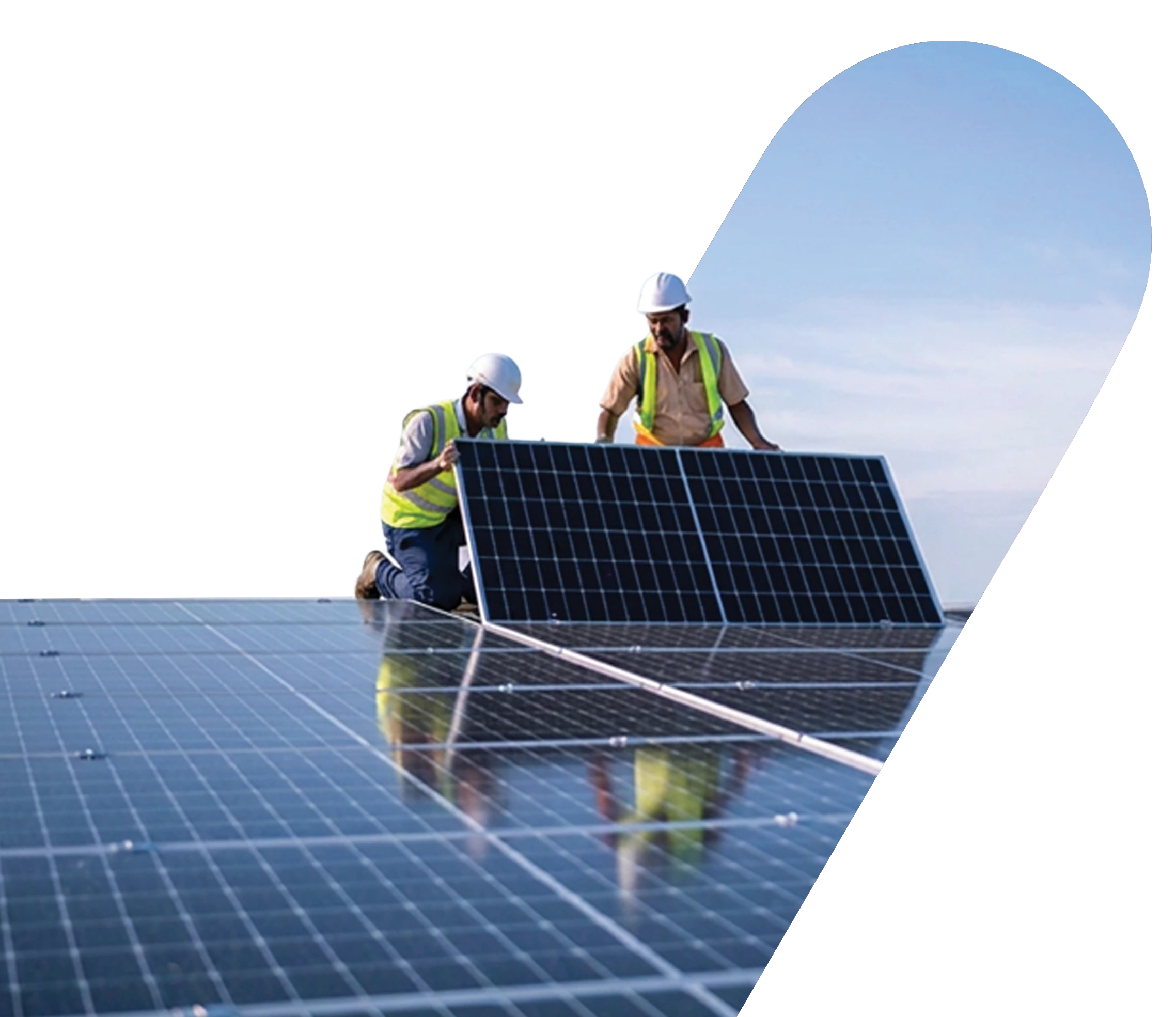




Environmental sustainability is embedded into the Company’s broader ESG strategy and integrated across governance, operational decision making, risk management, and long-term value creation processes. The Company’s sustainability and climate-related financial disclosures prepared in accordance with SLFRS S1 and SLFRS S2 are presented in the dedicated “SLFRS Sustainability-related Financial Disclosures” section of this Annual Report.
Our Natural Capital strategy pivots on improving resource efficiency, reducing environmental impact, and strengthening the sustainability and resilience of its digital infrastructure ecosystem. As an energy-intensive technology and connectivity provider, the Company prioritises renewable energy adoption, energy optimisation, sustainable infrastructure development, responsible waste management, biodiversity conservation, and circular economy practices across its operations. Strategic initiatives during 2025 included the solarisation of network sites, modernisation of energy-intensive infrastructure, implementation of energy saving measures, enhancement of electronic waste management processes, and expansion of water stewardship and biodiversity initiatives to support sustainable digital growth and long-term operational resilience. As the Company advances its transformation into a future ready TechCo, it remains committed to building a low-carbon, resource-efficient, and environmentally resilient operating model through continued investments in sustainable technologies, renewable energy solutions, and operational optimisation, while supporting Sri Lanka’s broader sustainability and climate priorities
873
Solarised Network Sites
18%
Renewable-powered Base Stations
4.2
hectares
Supporting conservation of mangrove ecosystems in Puttalam
4.8
tonnes
Copper sold for recycling
6,509 MWh
(Approximately)
Energy Generation Capacity through Solar PV
How We Impact SDGs


 Environmental, Social, and Governance (ESG) Framework
Our commitment to sustainable value creation is anchored in an Environmental, Social, and Governance (ESG) approach focused on environmental sustainability, community development, education youth empowerment, and digital inclusion. This approach is strategically mapped to the 17 United Nations Sustainable Development Goals (SDGs), ensuring our corporate objectives foster environmental stewardship, social equity, and robust ethical governance.
We joined the United Nations Global Compact (UNGC) Network in 2024. Therefore, operations are strictly aligned with universal principles on human rights, labour standards, environmental protection, and anti-corruption.
Fostering a Green Workplace Culture
A vital component of environmental governance is engaging our workforce and making sustainability a shared responsibility across all levels of the organisation.
Green principles are incorporated into education, training, and awareness programmes that impact daily operations across the company, through continuous capacity-building initiatives focused on resource efficiency, waste reduction, and sustainable practices. Programmes such as Energy Week instil energy-saving awareness through a series of direct and indirect activities. Internal and external digital awareness campaigns also educate staff and the public on ecological conservation and responsible behaviour.
Employee engagement and awareness ensure participation in our sustainability initiatives, while empowering staff to propose and implement their own innovative projects. Projects are formally recognised, and employee-led environmental initiatives are incentivised. In addition, employee volunteering encourages staff to actively participate in our environmental sustainability and ESG initiatives.
ISO 14001:2015 Certification – Strengthening Environmental Leadership
We achieved a significant milestone in our sustainability journey with the successful certification of our Head Office under the ISO 14001:2015 Environmental Management System (EMS). The certification was independently verified by Bureau Veritas, reinforcing the organisation’s commitment to internationally recognised environmental standards.
This achievement reflects our strong focus on environmental sustainability and its long-term vision of becoming a green leader in the telecommunications sector. The EMS is aligned with the Green Building Council of Sri Lanka. The Green Building Council of Sri Lanka principles and integrates environmental responsibility into core business operations.
The certified system strengthens our approach to environmental management through key priorities, including reducing environmental impacts, ensuring regulatory compliance, promoting recycling and green procurement, improving energy efficiency, and reducing carbon emissions. It also encourages employee awareness and responsible practices across operations and the value chain.
This certification further enhances our environmental credibility and demonstrates its readiness to meet growing expectations from customers, regulators, and investors while supporting long-term sustainable growth.
Energy and Emission: Commitment to Long-term Sustainability
As a technology company providing fixed, mobile and IPTV connectivity to millions, our network operations are highly energy intensive. Recognising that the majority of energy consumption arises from network operations, we continue to prioritise efficiency and optimisation initiatives in this area.
| 2025 | |
| Energy consumption within the organisation | 78.4 GWh |
| GHG Emissions only Hydrochlorofluorocarbons (HCFCs)* | 32,716.32 tCO2e |
Energy Management and Climate Action
As part of its commitment to environmental sustainability and responsible resource management, we implemented a structured Energy Management Strategy during 2025 aimed at minimising environmental degradation and reducing the Company's carbon footprint. The strategy is aligned with ISO 50001 energy management principles and broader ESG governance requirements, supporting long-term operational resilience and national climate objectives.
Through targeted investments in renewable energy, energy-efficient infrastructure, and low-carbon network operations, we continued to strengthen our transition towards cleaner and more sustainable energy consumption models across both SLT and Mobitel operations.
Expanding Renewable Energy Infrastructure
Continued investments in solar photovoltaic (PV) solutions across network infrastructure and operational facilities reinforced the Company's transition towards cleaner and more resilient energy operations.
During 2025, SLT completed 33 grid-connected rooftop solar PV installations across its premises, including the Welikada Green Building and SEMV5 installations, thereby contributing a total clean energy generation capacity of 1,524 kWac. These initiatives resulted in annual energy savings of approximately 2,200 MWh and reduced the carbon footprint by an estimated 825 MTCO2e per year.
Further strengthening the Company’s renewable energy transition, our mobile arm, Mobitel, accelerated renewable energy adoption across its network infrastructure during the year by completing 840 PV solar sites with a total installed generation capacity of 3,420 kWac. These initiatives delivered annual energy savings of approximately 4,309 MWh while reducing carbon emissions by an estimated 1,767 MTCO2e annually.
The Company plans to further expand its renewable energy initiatives and strengthen sustainable network operations, with solarisation targeted across 1,000 site locations by Q2 2026.
Energy Efficiency and Operational Optimisation
We have systematically replaced outdated legacy equipment with high-efficiency alternatives, including the installation of energy-efficient light-emitting diode (LED) lighting. During 2025, the Company implemented multiple energy optimisation initiatives, including the installation of over 2,000 LED lighting units and inverter-type air-conditioning systems with a combined installed cooling capacity of 312 TR. These interventions resulted in annual energy savings of approximately 105,040 kWh and contributed to a reduction of 76 MTCO2e in carbon emissions annually.
Responsible E-Waste Management and Circular Resource Use
We continued to strengthen environmentally responsible waste management practices through structured e-waste recycling initiatives aimed at reducing environmental impact and promoting circular resource utilisation. During 2025, a total of 384.62 tons of electronic waste was recycled, resulting in an estimated carbon footprint saving of 1,144.69 tons of CO2e, through the responsible disposal and recycling of electronic equipment, thereby minimising environmental pollution while recovering valuable materials through approved recycling processes. The environmental impact has been independently validated using internationally recognised methodologies, including ISO 14064:2018 and ISO 14040:2006, ensuring robust accuracy, consistency, and transparency in emissions accounting and lifecycle assessment.
Waste: Sustainability through Circular Practices
We prioritise responsible waste management as part of its overarching environmental strategy, guided by policies aligned with national regulations and global sustainability standards. Operating within a high-tech industry with inherent e-waste risks, the Company prioritises waste minimisation initiatives, structured recycling, and resource recovery programmes, and maintains environmentally responsible and compliant disposal practices across all operations. Sustainability considerations are also increasingly integrated into procurement and asset management practices, prioritising durable, upgradeable, and resource-efficient technologies that support extended lifecycle utilisation.
We adopt a comprehensive approach to electronic waste management:
- Segregation and processing: E-waste is systematically sorted for recycling or environmentally safe disposal.
- Refurbishment and redistribution: Repairable devices are refurbished and redeployed, extending asset life and reducing new procurement.
- Responsible disposal: E-waste is handled exclusively by suppliers registered with the Central Environmental Authority (CEA), ensuring compliance with environmental regulations and ethical disposal standards.
In addition, we minimise e-waste generation through sustainable procurement practices, prioritising durable and upgradeable equipment, and extending asset life cycles through proactive maintenance. Functional end-of-life units, including equipment recovered from client premises, are refurbished and redeployed wherever feasible.
Guided by circular economy principles, we focuse on maximising resource efficiency and keeping materials in use for as long as possible.
- Waste/Material recovery: Through our in-house recycling plant, we reused 4.8 tonnes of copper annually, reducing the environmental impact of raw material extraction while generating economic value and supporting employment.
- Waste/Material-use Reduction: Digitalisation initiatives, electronic documentation, and structured recycling programmes significantly reduce paper consumption.
- Food waste management: Segregation and responsible disposal practices minimise food waste across facilities.
In addition, the Group actively promotes sustainable waste practices among employees, suppliers, and other stakeholders. Recycling programmes are encouraged organisation-wide, supported by awareness initiatives that emphasise reduction, reuse, and responsible disposal of paper, food, and electronic waste.
Biodiversity: Environmental Conservation
Our long-standing support for environmental preservation – through habitat conservation, biodiversity protection, and reforestation initiatives – is aimed at achieving wide-ranging positive environmental outcomes.
We actively support the conservation of vital coastal assets by awarding research-based grants (Blue-Carbon Scholarships) to undergraduate students from local universities such as the University of Colombo, Wayamba University of Sri Lanka, and Uva Wellassa University of Sri Lanka. These scholarships provide vital support to study, conserve, and promote the sustainable utilisation of mangrove and coastal ecosystems.
Our support for research and academic study is complemented by direct mangrove restoration programmes carried out in collaboration with implementing partners. One such ongoing project is working to restore and conserve 4.2 hectares of mangrove ecosystems in Pubudugama, Puttalam District, in partnership with the Department of Forest Conservation.
Water: Responsible Utilisation
We have implemented green building facilities at its Operational Headquarters building in Welikada. One key aspect of these facilities is the effective management of wastewater, which helps minimise the risk of groundwater contamination and environmental pollution. Wastewater generated within the building is treated through an in-house treatment plant and reused for purposes such as landscape irrigation. This practice reduces the demand for potable water for irrigation activities, thereby supporting more sustainable building operations.
In addition, we have adopted integrated water conservation practices by collecting and reusing rainwater and condensate water generated from air-conditioning systems. The collected water is reused for flushing purposes within the building.
Furthermore, several mechanisms have been implemented to enhance groundwater recharge, including water traps for surface runoff and measures to increase water percolation.
Through these approaches, the Company minimises the requirement for potable water, reduces water wastage, and contributes to a more sustainable environment.
Vision for a Greener Future
Our long-term environmental strategy is anchored in a commitment to aligning our corporate trajectory with global climate science to ensure a resilient digital future for Sri Lanka. Central to this vision is our transition toward achieving net-zero greenhouse gas emissions by 2045.
As we evolve into a fully-fledged TechCo, we are also addressing the unique environmental challenges posed by advanced technologies. This includes managing the high-power requirements of data centres and the growing energy footprint associated with artificial intelligence (AI). The aim of our work with utility service providers and government regulators is to expand access to renewable energy and sustainable power solutions in the years to come. To ensure these efforts are sustained through robust oversight, we comply with stringent governance guidelines and maintain a dedicated focus on risk management, which takes into account climate risks and other sustainability-related risks for all new projects.